


11th June 2026
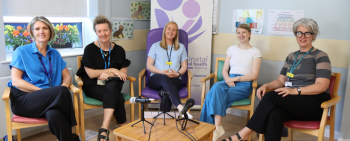
A mum is sharing her experience of postnatal mental illness to help raise awareness and encourage other women to seek support.
During Infant Mental Health Awareness Week (8–14 June), the Southern Health and Social Care Trust is highlighting the importance of maternal mental health and its impact on babies, children and families through a new podcast featuring Holly’s personal experience of recovery following severe postnatal mental illness.
Following the birth of her daughter, Holly experienced postpartum psychosis, a serious but treatable mental illness that can affect women in the weeks after childbirth. Symptoms can include confusion, hallucinations, delusional beliefs, severe mood changes and thoughts of self-harm. More broadly, around one in four women experience a perinatal mental health difficulty during pregnancy or after birth, with symptoms ranging from anxiety and low mood to more severe mental illness. Early recognition and intervention can make a significant difference to recovery.
In the weeks after birth, Holly describes feeling overwhelmed, frightened and unable to connect with her baby.
Holly said: “I really believed I would never love my daughter and that I had ruined everything. Looking back now, I can see that I was unwell. With the right support, things did get better.
“For so long I felt hopeless and thought I would never recover. But there is help available and recovery is possible. I want other mums to know they are not alone.”
Holly was supported by a number of services, including her Health Visitor, acute mental health services and the Trust’s Perinatal Mental Health Team. Over time, she recovered and was able to build her relationship with her baby.
She added: “I was listened to and supported without judgement. That made a huge difference. I want other mums to know they can reach out for help and they will not be judged.”
The podcast highlights the vital role of Health Visitors, who often build trusted relationships with women during pregnancy and continue to support families after birth. They are frequently among the first professionals to recognise when a mum may be struggling and can help families access the care they need at an early stage.
The discussion also explores how supporting a mother’s mental health helps strengthen early relationships between parents and babies, laying important foundations for a child’s emotional wellbeing, development and future mental health.
Holly also welcomed plans for a regional Mother and Baby Unit, which would allow mothers who need inpatient mental health care to remain with their babies while receiving treatment, helping to support their developing relationship during recovery.
Holly said: “Being able to stay with your baby while getting treatment would make such a difference for other mums. It would help mothers continue building that bond with their baby, even while receiving the care they need.”
Jan McGall, Director, Mental Health and Disability Services, said:
“Hearing directly from mums like Holly is incredibly important. Her story shows how difficult the postnatal period can be, but also how much of a difference early intervention and treatment can make.
“This podcast highlights how closely maternal and infant mental health are connected. When mothers receive the right care, it not only improves their own wellbeing and benefits the entire family unit, but also helps babies develop secure, healthy relationships from the earliest stages of life.
“We would encourage anyone who is struggling, or anyone who is concerned about a loved one, to reach out. Perinatal mental illness can affect anyone, but recovery is possible and services are available to help.”
The podcast is available on the Trust’s website and social media channels, or wherever you get your podcasts, search “Southpod”.